This is a flexible travel plan for those travelling in Rome and interested in covering all the basics, but also in visiting something unusual.
In this trip I will show you the Rome that can’t be missed, the one that will bring your history books to life before your eyes, and also the non-touristy Rome I learned to know with my friends born and bred there… and you will struggle to believe that those are two sides the same city. I’ll tell you where the Romans go to eat and where they meet in the evening for drinks, both in the city centre and in areas that you won’t probably find on your travel guide, so that you will get genuine food and authentic atmosphere.
A relentless activity of people, gestures, food and wine, have pushed Rome through the centuries and all of this is surprisingly concealed to most visitors. And this is where I will send you, mixing the history with the most modern culture: from the Forums to the MAXXI museum, from the paintings and frescoes of Caravaggio and Michelangelo to the street art of MURo, from the busiest flea market in town to one of the quiet hilltop parks from which terraces you can enjoy an unforgettable view of the sunset of such an incredible city.
Day 1: The Ancient Empire
Let’s start our trip where it all began.
Walk around the Colosseum admiring the magnificent arena. The entrance fee is €12 and it includes also the Roman Forum and the Palatine Hill. If you decide to visit it make sure you buy the ticket ahead to jump the queue. From there take a stroll along Via dei Fori Imperiali and travel back in time in the Palatine Hill.
At the other side of the hill you’ll find the “Altare della Patria” (Altar of the Fatherland), a huge marble building of dubious taste which offers a great view over the Palatine Hill and the whole of Rome. Behind it runs a street (Via di San Pietro in Carcere) that climbs up to the Campidoglio, where you’ll find the square designed by Michelangelo and the famous “Lupa”: a bronze statue of a female wolf suckling two babies that will become the mythological founders of the city. It’s a small statue but with a strong meaning for the Roman people and their beloved football team.
It’s been a long day and it’s time to join the locals for a rewarding aperitivo in Monti. From 6pm onwards the streets and piazzas are animated by cheerful crowds. Have a glass of wine or a cocktail before heading to Ai Tre Scalini (Via Panisperna, 251) for dinner. Check out the live music events, as the new season will start again in September!
[box type=”bio”] Discover where to sleep and eat, and the best day-to-day tips on our guide to Rome[/box]
Day 2: Eat Pray… and Walk
Today you’re visiting the Vatican Museum, which will take up most of the day. In order to avoid the scary queues it’s best to buy the tickets online in advance. After the museums you can visit the majestic St. Peter’s Basilica, the access is free but controls are very strict, and a “respectful” dress code is required: make sure that shoulders and knees are covered. The access to the dome costs €7.
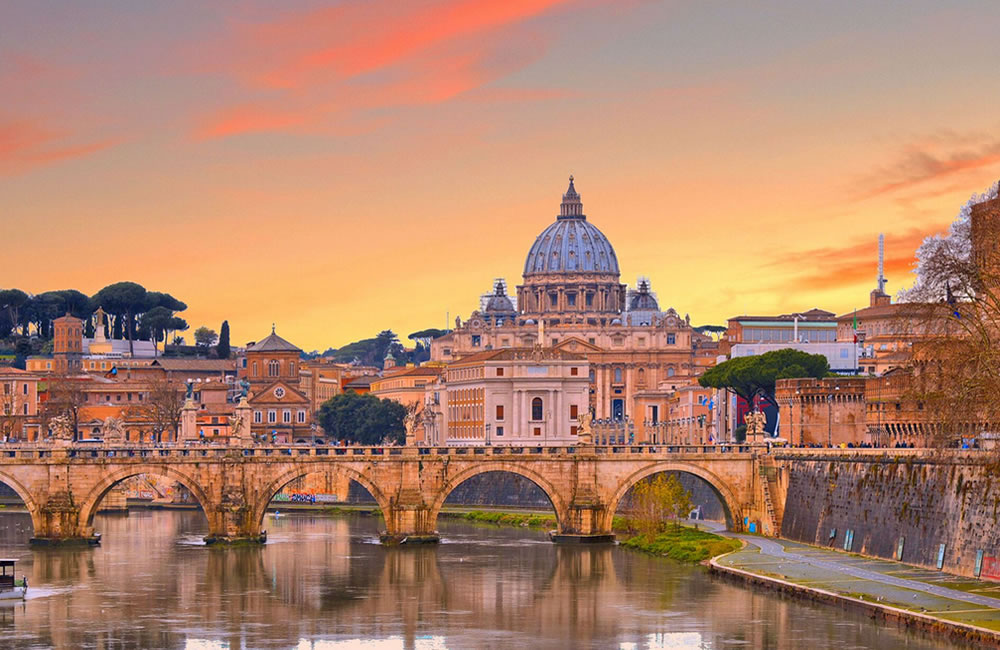
When leaving Vatican City follow the large boulevard unfolding in front of St Peter’s square to reach Castel Sant’Angelo, by the river Tevere. The entrance is €10.50 but it will also guarantee access to the terrace with a great view on Rome.
From there cross the Sant’Angelo bridge, lined with peddlers and beautiful statues, and follow the river going south until you reach the Ghetto. This is one of the most interesting areas of Rome, not only for its Synagogue, the remains of Portico of Octavia and the unique spirit of this ancient neighbourhood, but for the delicious kosher pizza. Have a trancio (a slice) of pizza rossa or bianca (red, with tomato, or white, whitout) at any traditional bakery… my favourite is Antico Forno del Ghetto (Piazza Costaguti, 30). If you want a proper dinner why not enjoying the unique roman-kosher cuisine? I usually go to Nonna Betta (Via Portico d’Ottavia, 16) or, if it’s full, I would go to Ba’ Ghetto (Via Livorno, 10). A restaurant, rather than a bakery, will push you closer to the top of your budget but trying the Jewish Artichoke is a priceless experience.
[box type=”download”] Did you know? On the Aventino Hill, between the Orange Grove and the Rose Garden there is a big wooden gate. If you peep through the keyhole you can see St. Peter’s Dome.[/box]
Day 3: Adventure on two wheels
After so much walking it’s time to give those feet some rest. Rent a bike and head to via Sannio, where you will find an authentic Roman market. More than just a typical market, it’s a stage where each vendor is contributing to a noisy, funny show.
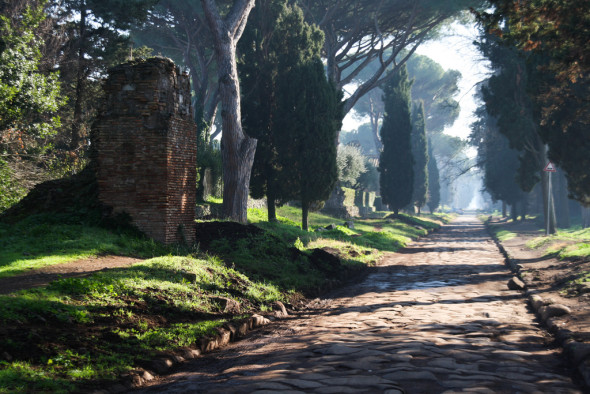
After the market you should start following via Appia Nuova, to reach the archaeological park of Appia Antica. Here you’ll follow the ancient road that connected Rome with Puglia, the Empire’s door to the East, and you’ll spend a day in one of the most beautiful parks in the area. You’ll be one of the few tourists visiting the ancient ruins and, if you’re going on a weekend day, you’ll find plenty of locals cycling and walking in the park. I suggest to get a sandwich on the way there to stay in the budget, otherwise you can stop at the picturesque Hostaria Antica Roma or at the more affordable Hostaria Al Bivio.
The bikes are yours for 24 hours so why not use them for going out in the evening? The area of San Lorenzo is popular amongst the Romans for its nightlife and alternative vibe, join the crowds enjoying the mild Roman evenings and have a drink (or two). There are many bars to choose from… my favourite? It’s the Rive Gauche (Via dei Sabelli, 43), a lovely bar serving good wines and beers and, generally, only European products. They have an aperitivo (free food with every drink) until 21 or, if you miss it, you can try some late night supplì (deep fried ball of rice) from one of the many shops around via dei Sabelli.
Day 4: A day at the Beach
My suggestion is to hire a car for two days. Drive out of town and head to Ostia, where you can visit the well preserved remains of the ancient Roman harbour.
I would then recommend to hit the beach as soon as possible, but keep in mind that the savvy Romans don’t go to Ostia Lido, but Torvajanica, few miles south where access is free and the atmosphere more relaxed. The beach is divided in gates (cancelli), the best ones go from the 7th to Zion. For lunch, if you haven’t prepared sandwiches, go to the Seventh Gate restaurant, for a simple but authentic meal.
After a day in the sun I suggest a relaxing evening at the Pigneto. While the area is quite tricky to reach without a car (in fact you’ll mainly meet locals) is a gem of a pedestrian area rich of bars and good vibes. For dinner you should go to Rosti (Via Bartolomeo d’Alviano, 65) a laid-back typical restaurant with garden or, for something a bit more chic you might try Primo (Via del Pigneto, 46). Otherwise all the bars offer platters (taglieri) of cured meat (affettati) and cheese (formaggi).
Day 5: The Seven Hills of Rome
On a hot day, as an alternative to the beach, Romans like to go to the hills surrounding their city, to breath some fresh air and indulge in the food delicacies that make this area special.
A few minutes drive out of Rome and you’ll be surrounded by the lush hills of the park “Castelli Romani“. Head to Castel Gandolfo and drive around the Lake Albano.
Ariccia is a small village but really pretty and worth a visit. Have a stroll along the main road, Corso Garibaldi, until the terrace overlooking the country, and take a look inside the shops, especially the barber, where time seems to have stopped in the 50s. However the main attraction here is the food, served in restaurants called “fraschette”. Most of them are conveniently located on Via Borgo S. Rocco (try the Be Bop) but the best one is Fraschetteria Bianchi, 5 minutes walk along via dell’Uccelliera. If you prefer to eat in a more rural environment then you need to get a table by the lake at Le Fratte Ignoranti. Wherever you decided to go don’t leave without trying the famous porchetta (tasty hog roast) and the refreshing local wine.
[box type=”download”] Did you know? Now Castel Gandolfo, for the first time in history, has been opened to public by Pope Francis. Apparently the gardens are a heavenly sight but the single admission is €26 …ouch![/box]
Day 6/7: Classic Rome and its Piazzas
So far you’ve seen parts of Rome that most tourist don’t even know they exist. It’s time to go back to the basics and visit the most Roman of things: la piazza, the beautiful squares that are at the core of this city’s life.
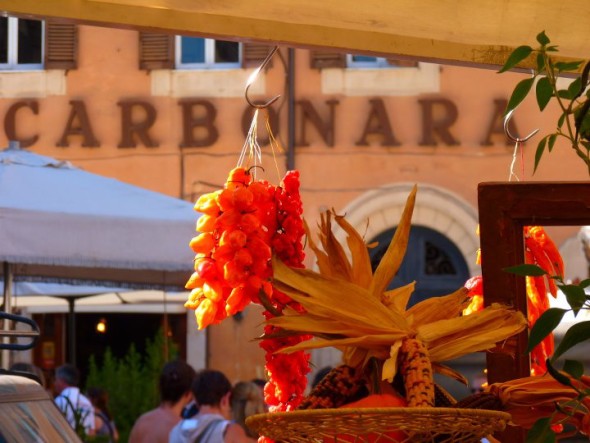
Piazza Navona, Pantheon, Campo de’ Fiori, Fontana di Trevi… they are all there, at short walking distance one from the other. So you can decide where to go and when. I would recommend to start and end your day visit at Campo de’ Fiori: in the morning it’s covered by the famous fruit, vegetables and flowers market, while in the evening it’s busy with locals going out for a drink before dinner.
For lunch you should go to a restaurant that is an institution: it’s central, it’s packed but it never changed since the day it opened. Il Baffetto, in via Del Governo Vecchio, is where the Romans go when they are in the area. They don’t accept reservations so be prepared to queue… it’s worth it! There is also il Baffetto 2, which belongs to the same family but it’s more touristic; the food is still very good but the vibe is less authentic.
The works of the unmatched master Caravaggio can be found in many museums in Rome but, for reasons obscure to me, it seems that only few people know that in this area there are three churches where you can see some of his works. For free. There are three works in San Luigi dei Francesi, near Piazza Navona, two in Santa Maria del Popolo, near Piazza del Popolo, and one in Basilica di Sant’Agostino, also not far form Piazza Navona.
Few minutes walk from Campo de’ Fiori, on your way back to your room, you can stop at Open Baladin, a bar specialized in artisan beers from the vibrant italian microbrewery scene. They serve great food too!
 Not only it’s one of the very few authentic hostels in Milan, but Ostello Bello offers some of its services and activities to a wider audience. Anyone can visit it without necessarily having to spend a night. They have food all day round and leisure activities from music to games, sometimes they’re improvised so any day is good to pop there. If you’re after a meaty lunch make sure to go there for the monthly “Turbo Burger” day. Only one item on the menu, guess what it is?