Category: Experiences

  • 7 Great Things to Do in Bangkok

    7 Great Things to Do in Bangkok

    Thailand is one of Southeast Asia’s top destination spots that continue to welcome visitors from around the world. The country’s capital city, Bangkok, is home to many local attractions that are well advertised the world over. Tourists flock to experience Buddhist sacred temples, lavish star-studded hotels, and live drama performances to savory restaurants. If you’re out of ideas on what to in Bangkok, here are some great options to consider. You might discover something entirely new!

    Spend a Day at the Temple

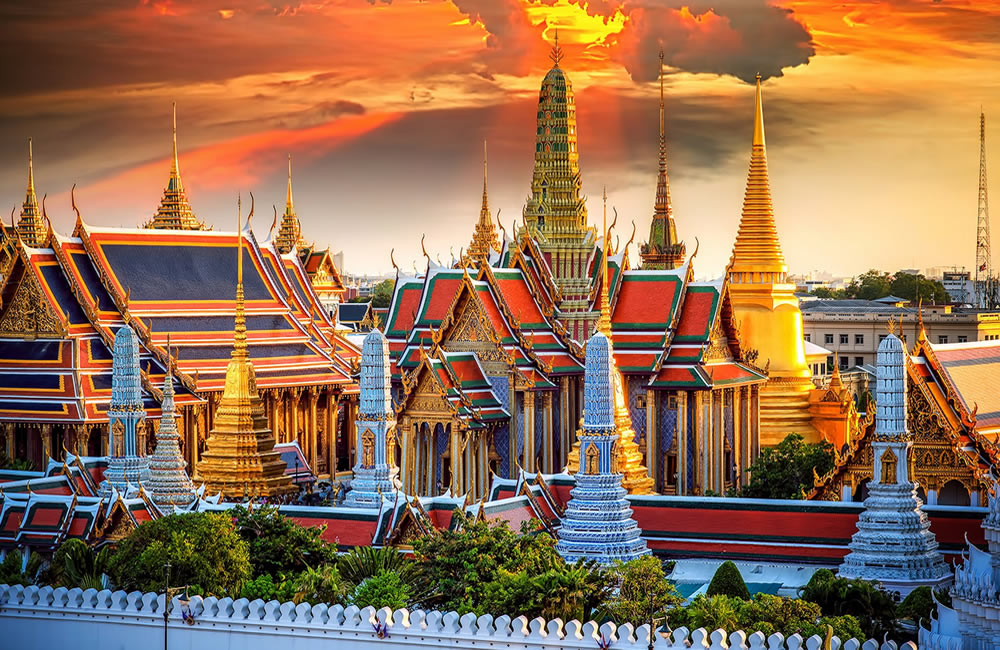
    Bangkok is home to many sacred temples and heritage sites which continue to be visited daily by locals and tourists alike. Temples are greatly worshipped in Thailand as it acts a center of peace for the Thai people. Residing in temples are abbots and their disciples who perform daily sermons to those wanting to be blessed or bestowed good fortune upon.

    However, if your trip isn’t about taking photos of the neo-classical buildings mixed with stunning Thai architecture, guests can opt to be in a presence of an abbot (with a translator at hand). Many foreigners come to temples to seek luck, love, protection, healing and prosperity. This comes in a form of a tattoo, a blessed amulet or a blessed ‘spell’ written on cloth. These amulets are believed to bring forth good fortune.

    Get the Holistic Experience

    Without a doubt, a lot of people come to Thailand to experience the holistic nature of traditional massages and natural therapies. One of the recommended places to receive an authentic Thai massage is at Wat Pho. This is one of Thailand’s earliest massage schools. At the temple, visitors can get a glimpse of the techniques etched on walls or in old scrolls. The Traditional Medicinal Practitioners Association Center is an open-air hall located outside the temple with master massagers and students waiting to work their charm.

    Immerse Yourself in Drama

    It’s not Thailand if one has never watched live shows! Bangkok is home to many classical dances that used to be only performed in the inner courts. Many of these performances have evolved over the years, incorporating new elements into their moves without straying from its origins. One of the many famous places to watch Thai classical dance is at Chao Phraya Cultural Center, Supatra Riverhouse, Sala Rim Nam, Aksra Theatre, National Theatre and at Thai Cultural Center.

    Get Spoiled

    Thailand is home to many name-worthy hotels that resonate: Comfort, luxury and affordability. There are over a thousand or so hotels in Bangkok alone, offering different degrees of comfort to the avid guest. Most, if not all of the top hotels are located close to major transportation routes, shopping malls (Mercure Siam and ibis Siam, for example are both close to MBK), entertainment venues (Novotel Fenix Silom) and other close-by attractions. The hotels in Bangkok strive to provide guests with the ultimate vacation experience with relaxing spa treatment, all day buffets, shuttle service and smiles.

    Sport Your Way to the Top

    If you’re planning on dishing out some moves in Thailand, what better way than to take part in Thai boxing? Many foreigners who come to Thailand go to Lumpini Stadium or Ratchadamnoen Stadium to meet with boxing coaches and master nasty elbow blows and kicks. The idea, in theory sounds fun and exciting but once you’ve dished out a couple of moves, you’re guaranteed to be breathless after two rounds!

    However, if you’d want to sit back and watch the show, you can go to MBK Fight Nights are held every Wednesday. The best part? Admissions are free!

    Partying without Borders

    If the initial idea was to come to Bangkok and party the night away, well, this is a good chance to do so. Bangkok is the centralized hub for mingling with the locals or chilling out with friends. These entertainment venues comes in all shapes and sizes and can be found at Asoke, Patpong, Kao San Road and Nana districts. These districts are crowded, loud, bright and very much “in your face”. Most of the venues open until roughly 2 AM and only a handful of places open until 4 AM.

    Divine Dining

    It’s definitely not Bangkok if one hasn’t tried out delicious food being pushed around by hawkers or is ready to be ordered in a fancy restaurant. Everybody loves Thai food simply because of the harmonious flavors that burst in the mouth upon consumption. Roast duck on rice, stir fried seafood, chicken curry, green curry, noodles are just the tip of the iceberg on what Thai food can offer you. Don’t be afraid to try Thai food if you’re curious!
  • Great Apes Encounter: See the Mountain Gorillas

    Great Apes Encounter: See the Mountain Gorillas

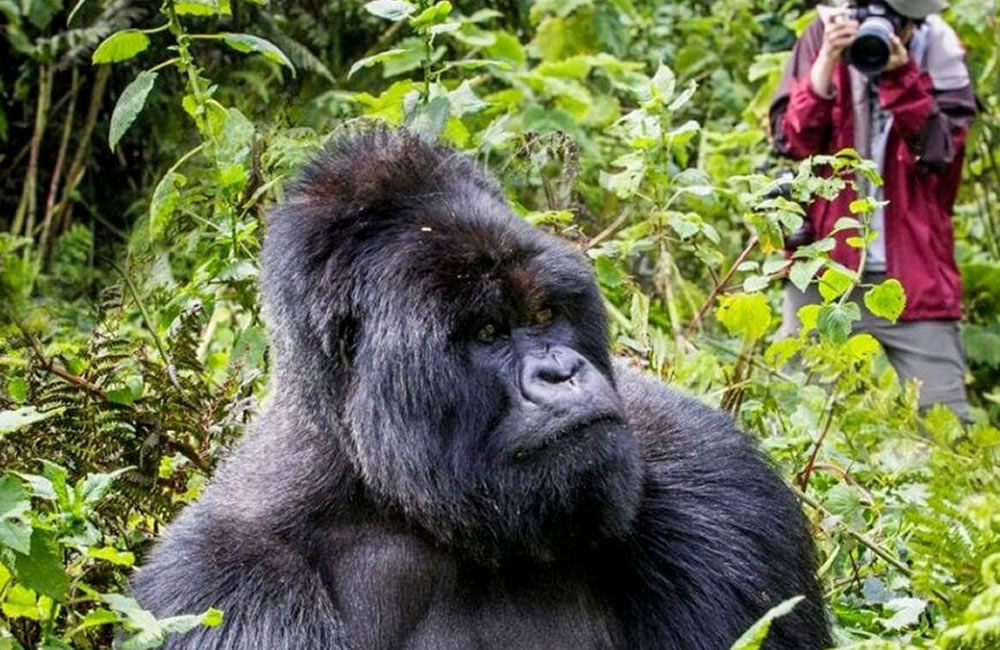
    While on a gorilla safari in Rwanda, if the sight of gorillas doesn’t leave you breathless, then altitude at 9,000ft above sea level, may well do. What happens when you come face to face with an endangered mountain gorilla? I opted to crouch. I had fallen behind, with my back to the rest of our trekking group, when suddenly I was confronted by a young male coming the other way. It was a moment I’ll long never forget. Dark, unblinking eyes fixed me in an instant. Then, all huge knuckles and hairy shoulders, he approached. Fascinated, I was rooted to the spot. He sauntered past, no more than a foot away.

    Beautiful Rwanda a country determined to make the most of its natural assets; is renowned for its mountain gorillas and in fact they didn’t disappoint. Found in the far north-west of the country, in the Volcanoes National Park, twelve groups of eight visitors get to spend an hour each day with each family group and proximity to some of this planet’s last remaining mountain gorillas. These great apes are only found in three countries; Rwanda, Uganda and the Democratic Repuplic of Congo.

    While at park headquarters Fidel, our guide, briefed us highlighting the dos and don’ts throughout the Rwanda gorilla tour. We were assigned and visiting the Sabyinyo family group,” he explained. “this family comprises 12 gorillas, including the largest silverback, Guhonda. His name means ‘chest beater’. All of the gorillas have names; we distinguish them by the shape of their noses.

    Our trek through thick and bamboo forest, fat-leafed foliage was relatively sedate, but at nearly 9,000 feet above sea level, it still occasionally had me panting for breath. During our hour with the group, which passed incredibly quickly, we were also lucky enough to get very close to Guhonda. He, too, eyed us up, almost posing.

    Further turns around clumps of bamboo brought us to a huge blackjack, a smaller male and a tiny baby. We watched enthralled as he clambered and tumbled around in the bamboo. He was charming. Father looked on unperturbed as visitors feet away snapped like mad with their cameras. It was so close, so intimate, I felt almost embarrassed.

    The gorilla family group we were assigned was apt. The lodge where we were staying was called Sabyinyo Silverback Lodge was outstanding, one of the most comfortable of the accommodation around this park. It was here I was asked an unexpected question. “How is the Queen?” Merarry, the receptionist, was a keen royalist; he even knew the national anthem! But why? Despite the country’s lack of prior connection with British colonialists, Rwanda’s membership was officially welcomed to the Commonwealth last year; the 54th and newest member.

    The future is what everyone in this tiny East African country is fixed on. Putting past horrors behind them, a new generation of Rwandese is making ambitious plans for development, build a new Rwanda. This includes tapping into the business and cultural opportunities the Commonwealth offers, and new allegiances with anglophone neighbors – Kenya, Tanzania and Uganda.

    Unsurprisingly, tourism is an integral part of the mix. The Rwanda Development Board (RDB), which looks after tourism, is working hard to encourage visitors to do more than just visit the gorillas. Develop a diverse tourism sector for longer visitor stay.

    A two-hour drive brought me to Kigali City, the capital. The road dipped and swooped past tiny mud huts perched precariously on steep hillsides, each an island in a sea of banana and cassava plants. The warm air was full of the scent of eucalyptus and cooking smoke. Previously a backwater, Kigali now throbs with urban life – but with little of the chaos of many African cities. I shared a dinner at funky lounge bar Republika with friends.

    We drank cold beer and munched burgers laced with hot piri piri sauce, surrounded by the hubbub of Kigali’s movers and shakers. And they certainly know how to move. Rwandans love to dance. The dance floor at Top Tower nightclub on a Friday night was stacked with waggling bottoms and flailing arms to an eighth-floor backdrop of the night-time cityscape.

    After the urban excitement of Kigali, I took a Rwandair internal flight to Kamembe in the far south-east of the country. A one-hour drive brought me to another of Rwanda’s park highlights – Nyungwe Forest. Nyungwe is a big part of RDB’s tourism plans. Covering an area almost the size of Hampshire, it’s the largest slice of protected medium-altitude rainforest in Africa, stuffed with species – orchids, birds, reptiles and, in particular, chimpanzees. It’s the kind of place visitors ought to hang around longer to see.

    Previously the problem used to be the accommodation stay: just a cheap hostel or campsite. But that has changed. I was booked and slept into the beautiful Nyungwe Forest Lodge. Hidden among slopes covered with tea plants, it features designer chalets with balconies overlooking the rainforest.

    A 4.30am start meant there wasn’t long to enjoy its comforts, but the early start was worthwhile. Above me the night sky was cloudless, with a sprinkling of stars; the wind in the rainforest was the only sound. We picked up our excellent guide, Kambogo, and bumped along in a 4WD for an hour. Dawn revealed pools of cloud in the valleys below, which the rising sun turned from white to gold in moments.

    We set off following a signpost marked “Rukizi Trail”. Kambogo led at a cracking pace. “The trackers radioed to say the chimps may move soon!” he said. We forked onto a smaller trail. The slope became much steeper and the rainforest mulch under my boots more slippery.

    We burst onto a wider trail to meet up with our trackers. They guided us at gentler pace to a clearing that dropped away, offering views of enormous fig trees. It took a while to spot them, but there we eventually saw a family of chimps, swinging high in the trees, cramming their mouths with figs. As with the gorillas, our watching time was limited to an hour, but we were unable to get anywhere near as close.

    The Nyungwe forest isn’t just for hard-core trekkers, though you do need a level of fitness. There are guided walking trails, waterfalls, remarkable bird life and lots of monkeys. The latest attraction is a 220ft-high aerial walkway offering immense rainforest views. But just as we arrived it began to rain. “We can’t do the walkway if it’s raining. It’s a safety precaution,” says Kambogo. Secretly, I’m relieved. I get vertigo. That drop was already making my head spin.

    As we walked back, the rain became heavier. The final stretch of path revealed a huge gap in the canopy. I stepped into the gap and looked out at precipitous hills unrolling towards Lake Kivu on the horizon. Cooling rain ran down my face. Suddenly, a brief halo of sunlight lit the rain forest, with its centuries-old trees. Amid all the excitement of progress, I thought, Rwanda’s bright future is inextricably linked to the wonders of its primeval past.