Category: Africa

  • Guide To Gorilla Trekking in Congo

    Guide To Gorilla Trekking in Congo

    Our guide to gorilla trekking in Congo takes travellers through the whole process of trekking the endangered mountain gorillas in Virunga National Park, permit cost, the best time to undertake the adventure, information on booking accommodation and transport, rules and regulations to follow when trekking gorillas, and the packing list for gorilla trekking in Congo.

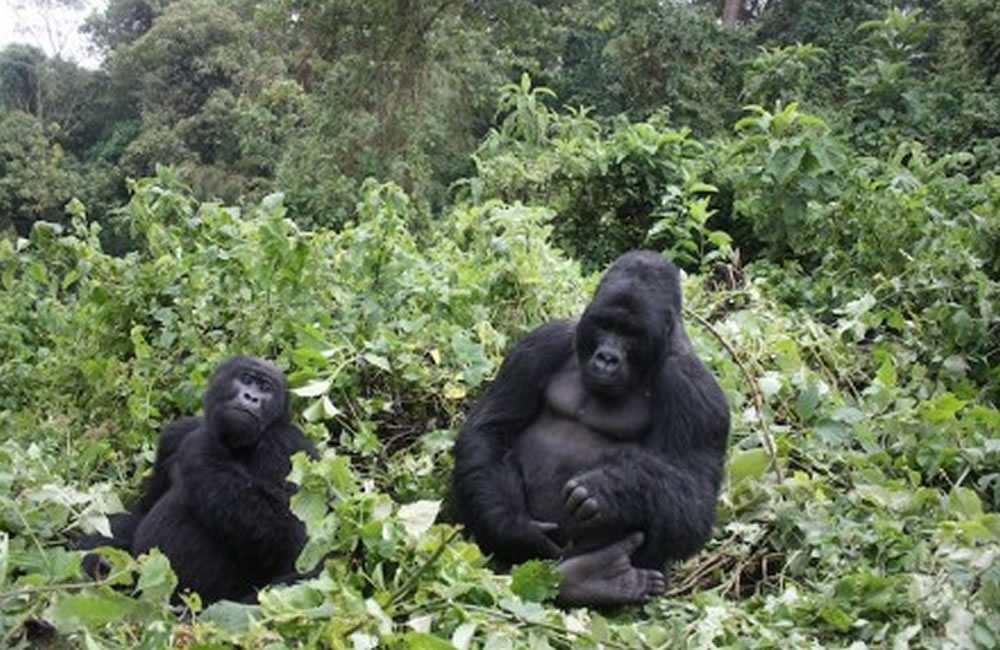
    In the Eastern Democratic Republic of Congo, within the rainforests high on the mountains are the endangered mountain gorillas, one of the most sought-after wildlife species in Africa. These Great Apes live in Virunga National Park, a UNESCO World Heritage Site gazetted in 1925 and sprawling for over 7800 square kilometers. This Park is home to about 200 gorillas mainly occupying the southern region of the Park.

    Gorilla families and available gorilla Permits for the Democratic Republic of Congo

    Virunga National Park is a haven to about 8 habituated gorilla groups that include Bageni, Humba, Kabirizi, Nyakamwe, Rugendo, Lulengo, Munyaga, and Mapuwa, hence only 64 gorilla permits are availed each day for this Park.

    How to book Congo Gorilla Permits

    Congo gorilla permits are the cheapest (when compared with the other two destinations where Great Apes are tracked) and cost only $400 per person per trek. Gorilla Trekking in Congo is, therefore, the ideal destination for budget and adventure travellers who would be interested in travelling off-the-beaten-path. However, due to continuous rebel attacks within the Eastern part of the country, Congo has been considered very unstable and unsafe with the recent kidnap of British visitors (in 2018) and murder of Park rangers leading to the closure of the Park. However, Virunga National Park was eventually opened for tourism in 2019.

    Regardless of the endless fights, instability, and challenges in gorilla conservation, Virunga National Park is still regarded as a wonderful African treasure in addition to being an extraordinary gorilla trekking destination. This Park takes pride in being one of the first National Parks within the African Continent with rich biodiversity and home to some of the most active Volcanoes in the World.

    Congo Gorilla Permits are only issued by ICCN (Institut Congolais pour la Conservation de la Nature) but there are two ways to book for these permits. First, you can book on your own by applying directly to ICCN via the official Virunga National Park website, email, phone, or reaching their Head Offices in Kinshasa. This process is however more cumbersome and frustrating as sometimes it becomes difficult to get to them and even when you do, the reply is not always guaranteed in addition to some permits being set aside for direct sales.

    The second way to book for Congo Gorilla Permits is through a trusted Tour Operator or Travel Agency. A number of Tour Operators in Uganda and Rwanda usually book over 80% of these permits, with visitors charged a commission of ($50-100) for administrative expenses. However, this commission is relinquished when you book the entire gorilla safari with them.

    How gorilla trekking adventures are conducted in Virunga National Park

    Gorilla Trekking in Congo is usually an all-day adventure with an early morning start. A typical day starts at about 7:00 am with registration and orientation at the Bukima Ranger Post. Park trackers always go ahead to find the location of each habituated gorilla group and their general distance from the briefing point. Your level of physical fitness and personal interest will determine which gorilla group you can be assigned to and the length of the trek.

    After the orientation, you will walk or be driven to the starting point where the trek begins at 8:00 am, depending on the exact location of the gorilla group you will be trekking.

    Hike for 1-5 hours before you finally find your assigned gorilla group and in some cases, it takes even the entire day before you reach the gorilla group. The scenery in Virunga National Park is incredibly beautiful and the hike to find mountain gorillas is just part of your experience. Always make sure to move at your comfortable pace and keep hydrated at all times especially at higher altitudes.

    As you start approaching the gorilla group, rangers will request you to leave your bags as you get closer to the gorillas. The moment you make contact, you will be allowed to spend one full hour with the mountain gorillas. You will see them munching on Bamboo shoots, grooming each other, resting, hanging on trees, mating, playing and mothers breastfeeding their young ones. Every gorilla trekking experience in Congo is exceptional thus make use of your one hour to enjoy this once-in-a-lifetime experience.

    Even when gorillas are on the move, you will move along with them as long as you maintain the minimum distance of 7 meters. There are instances of them approaching visitors but don’t feel frightened but instead slowly move back. Your guides are experienced and will be of great help in answering all your questions about the mountain gorillas, the rainforest, and other wildlife and bird species of the Park. These guides intimately know each gorilla group and can even identify each of them by their individual names and personalities.

    How difficult is gorilla trekking?

    Gorilla trekking is generally a physically demanding activity with visitors expected to walk through muddy trails, dense forests, and thickets thus it is important to always be prepared both emotionally and physically. The mist and abrupt or unexpected rains sometimes mean that hikes are slippery and at times muddy. However, porters can be hired to carry your backpack and camera equipment in addition to adding humor and excitement to the adventure.

    Important Gorilla Trekking guidelines in Virunga National Park

    When trekking gorillas in Congo, there is a need to follow the important trekking guidelines issued during a briefing at the Ranger post. Some of these guidelines include following the minimum trekking age limit of 15 years, spending only one hour in the presence of the mountain gorillas after hours of finding them, visiting each habituated gorilla family in a group of not more than 8 persons, maintaining a minimum distance of 7 meters when observing and taking photos of these Great Apes, keeping voices low while trekking or observing them, avoiding the use of flash photography, not drinking, eating or smoking while in the presence of mountain gorillas, first washing hands before embarking on gorilla treks, not littering the forest and keeping any rubbish or food leftovers to yourself and most importantly avoiding direct eye contact with the gorillas.

    Best time for Gorilla Trekking in Congo

    The Democratic Republic of Congo can be visited all year round although the best months to trek gorillas are June to September all the way to February. Most travellers opt to visit these Great Apes when the rain is reduced and the sun is shining through the jungle. December is the busiest month for Virunga National Park and it is prudent to book for the Congo Gorilla Safari. Much as the rainy season affects many plans and engagements, it doesn’t mean that the scheduled gorilla trek will completely not happen. Therefore even during the rainy season, the sun appears after a heavy downpour hence gorilla treks can go on without interruption.

    Safari lodges also offer discounted rates during the rainy/low season as a gesture to attract more visitors.

    What to pack and wear for Congo Gorilla Trekking

    Your typical day of trekking Congo gorillas is long and fairly difficult while mornings and evenings in Virunga National Park are cold. Packing and wearing the right gear/equipment will make your day remarkable and unforgettable. Have a portable backpack for carrying a lunch box, drinking water, and rain jacket during the trek, Strong hiking boots with extra ankle support for muddy and rocky terrain, a long-sleeved shirt for protection from insects, stinging nettles and sunshine, lunch box, long cotton socks, rain jacket, first aid kit with plasters, antiseptic wipes, rehydration sachets, anti-histamine cream and tablets, pair of binoculars, sunglasses, and sunscreen, camera, gardening gloves to protect your hands, a warm sweater for cold mornings and evenings, hiking pants and many others.

    How to get to Virunga National Park

    Virunga National Park is about 19 miles to the west of Goma Town, Eastern Democratic Republic of Congo. Most travellers to this destination usually jet into Kigali International Airport and catch the 4-5 hour road trip to the Goma-Gisenyi border crossing then continue to Virunga the same or the next day. Alternatively, flights can land at Congo’s Goma International Airport then continue by road.
  • 10 of the Most Beautiful Places in Marrakech

    10 of the Most Beautiful Places in Marrakech

    Like many North African cities, the Moroccan city of Marrakech is steeped in history, comprising as it is of an ancient fortified city and a modern adjacent city. This comfortable combination of ancient traditionalism and modern developments means that tourists will be in their element when seeking some of the city’s most sumptuous eye candy.

    Here, I draw upon my own experience of holidays in Marrakech in this two part series dedicated to some of the most visually gorgeous Marrakech attractions to see during Marrakech holidays. In no particular order, here are ten Marrakech must-see’s.

    1. El Bahia Palace

    Apparently, the name of this palace, built between 1894 and 1900, translates to ‘palace of the beautiful’ – and it certainly lives up to its name. Sadly, you won’t find Monica Bellucci here, at one of the premier Marrakech landmarks, but you will see plenty of water features, stucco panels, tiled floors, smooth arches, an eight-hectare garden surrounding the palace, plus a lot more. Just be sure to employ a guide, so that you don’t get lost.

    2. Ali ben Youssef Medersa and Mosque

    As Marrakech historical sites go, the Medersa, a former Islamic college, really does offer one of the most amazing feasts for the eyes with its plentiful art and architecture. You will, for instance, see plenty of carved cedarwood and colourful zellij tiles in the courtyard, while the interior of the prayer hall is covered in pine cone and palm motifs.

    The Mosque, another of the truly significant Marrakech heritage sites, is similarly worth a look, though it is only open to Muslims.

    3. Majorelle Garden

    You can expect a slightly higher entrance fee here than with many Marrakech attractions, but trust me – it’s worth it! The sheer variety of plants on display, many of which you probably never would have seen before, is truly awe-inspiring.

    You will probably never see so many different types of cactus plants in the same place ever again in your entire life. You should definitely arrive early, however, as the crowds appearing later can be annoying during any Marrakech holidays.

    4. Museum of Islamic Art

    You will see a lot to marvel here even before you get inside the thing. Not only is it based in the lovely Majorelle Garden (see above), it is based in a house quite unlike any in the city, boasting as it does a blue and yellow colour scheme and ornate windows. The exhibits themselves, many dating back hundreds of years, include carpets, jewellery, paintings and pottery, making the Museum of Islamic Art one of the most intriguing Marrakech heritage sites to visit during Marrakech tours.

    5. Atlas Mountains

    Though you will need to embark on an hour’s drive to see these up close, they can nonetheless be seen from several places in Marrakech, since they hover in the sky above the city’s pink defensive walls. The entire mountain range spans about 1,500 miles through Morocco, Algeria and Tunisia, but only the High Atlas subrange, often coated in snow during the winter months, is visible from Marrakech.

    6. Djemma el Fna (Jemaa el Fna)

    A place of both beautiful sights and sounds, any respectable Marrakech tours have to include a stop here. At night, it is populated by musicians, dancers and story tellers; by day, you can expect to see snake charmers and people with monkeys.

    You should also find stalls there at any time of the day, selling all kinds of stuff – so you can get a bite to eat while you are watching any of the shows, among the most exciting things to do when on holiday in Marrakech. Just remember to pay to watch them.

    7. Marrakech Souks

    This is a very colourful place – literally, as well as metaphorically. It is basically the main market place of Marrakech, where you can purchase almost anything – food, clothes, cutlery… you get the gist. Try your best to haggle for good prices – though, in my experience, you will probably still end up paying more for goods here than a native would. Those seeking mainly shopping-oriented Marrakech holidays should make this place their first port of call.

    8. Saadian Tombs

    These date from the time of sultan Ahmad al-Mansur (reigned 1578-1603), but were only discovered in 1917 after being left untouched for centuries. Befitting the name, you can find the graves of about sixty members of the Saadi royal dynasty that ruled Morocco in the late sixteenth and early seventeenth centuries. The real visual delights here are in the Italian Carrara marble monuments and the gorgeous decoration of the tombs.

    9. El Badi Palace

    This building, originally constructed in 1578, these days lies in ruins, and is clearly more accustomed to housing stray cats than Moroccan royalty. However, it isn’t difficult to imagine how truly majestic it must have looked prior to being torn apart by Alaouite sultan Moulay Ismail. It remains one of the most fascinating Marrakech historical sites, and exploring it remains one of the most riveting things to do in Marrakech.

    10. Koutoubia Mosque

    Though named after the booksellers market previously located here, it is fair to say that this, one of the most imposing Marrakech landmarks, is much more aesthetically pleasing than any pile of books. In fact, the minaret of the mosque has often been likened to the Eiffel Tower in Paris – and, like that monument, it looks even more beautiful when lit at night. Getting a photo of yourself and your fellow travellers in front of this is one of the truly essential things to do in Marrakech.

  • Ecotours in Rwanda

    Would you like to experience Rwanda differently? Why not go on a tour through Rwanda’s ecotourism destinations.

    A Typical Itinerary in Rwanda

    Rwanda is one of the famous countries inhabiting mountain gorillas. With arrival to Kigali City then proceed to Parc National des Volcans Rwanda. Head to hotel for dinner and rest for the next day.  On day two, after early breakfast, we head for a briefing about Gorilla trekking in Rwanda at the Kinigi Station, then head straight to the slopes of the Forest. Gorilla trekking tours in Rwanda is no-longer quite strenuous, we send an advance team so you can move direct to the spot where the advance team has located the Gorillas.

    Go Gorilla Trekking

    Maximum permitted time with the Gorillas is a one hour, return to the lodge and rest. You can choose to go gorilla tracking in Parc National des Volcans with no advance team. Tracking the gorillas through the light mountain forest on the slopes of the Virunga is a magical experience. If you are lucky you can get to the gorillas, spend an hour with them, and be back at the base in time for a late lunch! Some gorilla families however are more elusive, and tracking can take a full day, especially when it is wet and muddy then back to the lodge for dinner and rest for the next day as you wait for your flight to your next destination for wildlife experience.

    Iby’wacu Cultural Village

    If you wish, you can visit the Iby’iwacu Cultural Village, which will give you a fascinating insight into the traditions and history of Rwanda’s people. Rwanda Gorilla Safaris gives you all the pleasure to travel to Rwanda and enjoy all the gorilla families and wildlife at a relatively cheaper prince hence enabling you achieve your life time dream. Book now and experience the Rwandan gorillas,wildlife, birds and all other primates including the unique cultures in Rwanda.

    With very early have a cup of tea / coffee and proceed for a morning game drive to catch up with early raisers and predators returning to their hideouts. The game drive will reward you with chances to see a variety elephants, buffaloes, lions, Maasai giraffe, gazelles, impala, baboons, oribi, Butchel’s zebra, topi, bush baby, leopard and bush buck among others. Return to the Lodge and relax to lunch time. In the afternoon, you take a nature walk with a guide from the park, learning about the flora and fauna of the forest. Alternatively, you could go on a short trek to search for one of the troops of golden monkeys which inhabit the forest (this would need to be pre-booked, and is an additional cost).

  • Great Apes Encounter: See the Mountain Gorillas

    Great Apes Encounter: See the Mountain Gorillas

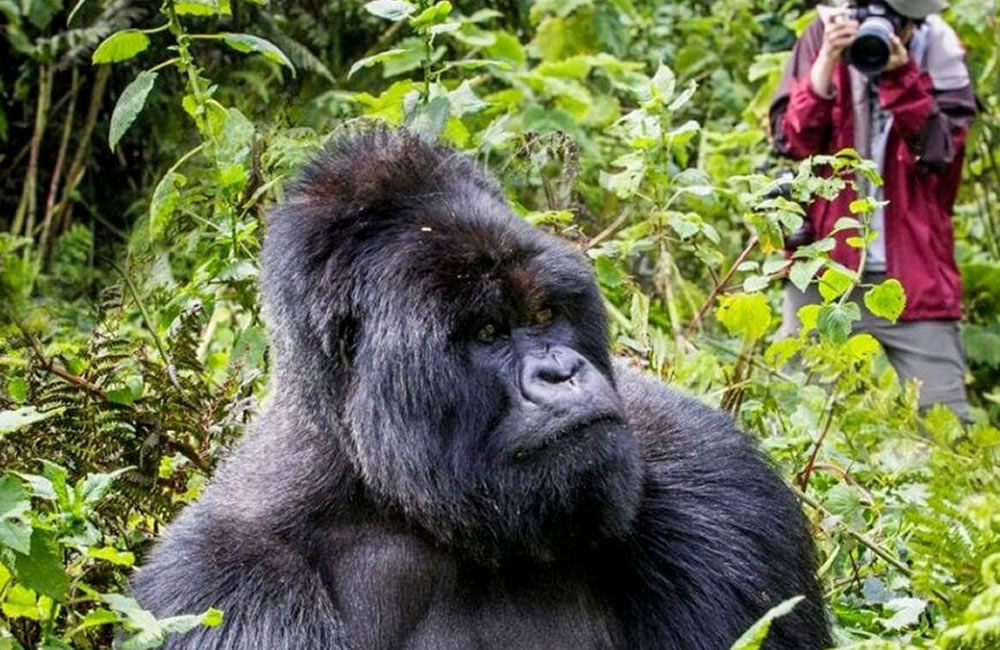
    While on a gorilla safari in Rwanda, if the sight of gorillas doesn’t leave you breathless, then altitude at 9,000ft above sea level, may well do. What happens when you come face to face with an endangered mountain gorilla? I opted to crouch. I had fallen behind, with my back to the rest of our trekking group, when suddenly I was confronted by a young male coming the other way. It was a moment I’ll long never forget. Dark, unblinking eyes fixed me in an instant. Then, all huge knuckles and hairy shoulders, he approached. Fascinated, I was rooted to the spot. He sauntered past, no more than a foot away.

    Beautiful Rwanda a country determined to make the most of its natural assets; is renowned for its mountain gorillas and in fact they didn’t disappoint. Found in the far north-west of the country, in the Volcanoes National Park, twelve groups of eight visitors get to spend an hour each day with each family group and proximity to some of this planet’s last remaining mountain gorillas. These great apes are only found in three countries; Rwanda, Uganda and the Democratic Repuplic of Congo.

    While at park headquarters Fidel, our guide, briefed us highlighting the dos and don’ts throughout the Rwanda gorilla tour. We were assigned and visiting the Sabyinyo family group,” he explained. “this family comprises 12 gorillas, including the largest silverback, Guhonda. His name means ‘chest beater’. All of the gorillas have names; we distinguish them by the shape of their noses.

    Our trek through thick and bamboo forest, fat-leafed foliage was relatively sedate, but at nearly 9,000 feet above sea level, it still occasionally had me panting for breath. During our hour with the group, which passed incredibly quickly, we were also lucky enough to get very close to Guhonda. He, too, eyed us up, almost posing.

    Further turns around clumps of bamboo brought us to a huge blackjack, a smaller male and a tiny baby. We watched enthralled as he clambered and tumbled around in the bamboo. He was charming. Father looked on unperturbed as visitors feet away snapped like mad with their cameras. It was so close, so intimate, I felt almost embarrassed.

    The gorilla family group we were assigned was apt. The lodge where we were staying was called Sabyinyo Silverback Lodge was outstanding, one of the most comfortable of the accommodation around this park. It was here I was asked an unexpected question. “How is the Queen?” Merarry, the receptionist, was a keen royalist; he even knew the national anthem! But why? Despite the country’s lack of prior connection with British colonialists, Rwanda’s membership was officially welcomed to the Commonwealth last year; the 54th and newest member.

    The future is what everyone in this tiny East African country is fixed on. Putting past horrors behind them, a new generation of Rwandese is making ambitious plans for development, build a new Rwanda. This includes tapping into the business and cultural opportunities the Commonwealth offers, and new allegiances with anglophone neighbors – Kenya, Tanzania and Uganda.

    Unsurprisingly, tourism is an integral part of the mix. The Rwanda Development Board (RDB), which looks after tourism, is working hard to encourage visitors to do more than just visit the gorillas. Develop a diverse tourism sector for longer visitor stay.

    A two-hour drive brought me to Kigali City, the capital. The road dipped and swooped past tiny mud huts perched precariously on steep hillsides, each an island in a sea of banana and cassava plants. The warm air was full of the scent of eucalyptus and cooking smoke. Previously a backwater, Kigali now throbs with urban life – but with little of the chaos of many African cities. I shared a dinner at funky lounge bar Republika with friends.

    We drank cold beer and munched burgers laced with hot piri piri sauce, surrounded by the hubbub of Kigali’s movers and shakers. And they certainly know how to move. Rwandans love to dance. The dance floor at Top Tower nightclub on a Friday night was stacked with waggling bottoms and flailing arms to an eighth-floor backdrop of the night-time cityscape.

    After the urban excitement of Kigali, I took a Rwandair internal flight to Kamembe in the far south-east of the country. A one-hour drive brought me to another of Rwanda’s park highlights – Nyungwe Forest. Nyungwe is a big part of RDB’s tourism plans. Covering an area almost the size of Hampshire, it’s the largest slice of protected medium-altitude rainforest in Africa, stuffed with species – orchids, birds, reptiles and, in particular, chimpanzees. It’s the kind of place visitors ought to hang around longer to see.

    Previously the problem used to be the accommodation stay: just a cheap hostel or campsite. But that has changed. I was booked and slept into the beautiful Nyungwe Forest Lodge. Hidden among slopes covered with tea plants, it features designer chalets with balconies overlooking the rainforest.

    A 4.30am start meant there wasn’t long to enjoy its comforts, but the early start was worthwhile. Above me the night sky was cloudless, with a sprinkling of stars; the wind in the rainforest was the only sound. We picked up our excellent guide, Kambogo, and bumped along in a 4WD for an hour. Dawn revealed pools of cloud in the valleys below, which the rising sun turned from white to gold in moments.

    We set off following a signpost marked “Rukizi Trail”. Kambogo led at a cracking pace. “The trackers radioed to say the chimps may move soon!” he said. We forked onto a smaller trail. The slope became much steeper and the rainforest mulch under my boots more slippery.

    We burst onto a wider trail to meet up with our trackers. They guided us at gentler pace to a clearing that dropped away, offering views of enormous fig trees. It took a while to spot them, but there we eventually saw a family of chimps, swinging high in the trees, cramming their mouths with figs. As with the gorillas, our watching time was limited to an hour, but we were unable to get anywhere near as close.

    The Nyungwe forest isn’t just for hard-core trekkers, though you do need a level of fitness. There are guided walking trails, waterfalls, remarkable bird life and lots of monkeys. The latest attraction is a 220ft-high aerial walkway offering immense rainforest views. But just as we arrived it began to rain. “We can’t do the walkway if it’s raining. It’s a safety precaution,” says Kambogo. Secretly, I’m relieved. I get vertigo. That drop was already making my head spin.

    As we walked back, the rain became heavier. The final stretch of path revealed a huge gap in the canopy. I stepped into the gap and looked out at precipitous hills unrolling towards Lake Kivu on the horizon. Cooling rain ran down my face. Suddenly, a brief halo of sunlight lit the rain forest, with its centuries-old trees. Amid all the excitement of progress, I thought, Rwanda’s bright future is inextricably linked to the wonders of its primeval past.