Month: December 2024

  • Restaurants in Milan: Good and Cheap

    Restaurants in Milan: Good and Cheap

    Milan is full of restaurant but finding one that meets the two basic requirements: good and cheap, is not that simple. If you walk in the city centre, holding your city guide you’re pretty hopeless and the chances of being ripped off for some basic meal you would find at your local Italian franchising restaurant are very high. After long researches, horrible experiments and precious tips by locals, we’ve shortlisted a few trusted ones:

    • Bocciofila Caccialanza (traditional milanese – home made)
    • Il Doge di Amalfi (pizza – neapolitan food)
    • Da Giannino l’abruzzese (traditional trattoria from the Abruzzi region)
    • Poporoya (sushi – japanese)
    • Trattoria Albero Fiorito (traditional milanese)

    Bocciofila Caccialanza

    Via Padova, 91 20127 Milano, tel.02 2826059
    Closed on Sundays

    Bocciofila” is the name given to those local joints where old people meet for drinking wine and playing bocce, the italian version of petanque. This has came quite in fashion recently and many places have taken this name without the attitude. But not Bocciofila Caccialanza. This one hasn’t changed in 50 years, and still preserve a charme like time stopped. If you  go there in summer you would be sitting in the big gravelled yard surrounded by other cheerful guests and grumpy waiters. There’s no english menu here, which is a good sign, and actually there is no menu at all. Just ask the waiter…I don’t know if they can speak any english so get ready and write down some of my favourites: Tagliatelle al ragù di cinghiale (tagliatelle with boar meat ragu) Cotoletta alla milanese (the traditional battered veal escalope) Grigliata mista (tasty grilled meat) If you’re still hungry after all this ask for the dessert “torroncino”, which is a creamy vanilla icecream topped with caramel and nuts.

    Il Doge di Amalfi

    Via Sangallo, 41  20133 Milano, tel.: 02 730286 Bus 93, Tram 5
    Closed on Mondays

    If you’re looking for a taste of “real Italy”, according to the stereotypes, this is the place to be. A noisy, crowded pizzeria, serving the best neapolitan pizza in Milan, it’s an unforgettable experience for your tastebuds and for your ears. Try to come quite late (from 9pm onwards) to find the confusion at its peak. This is when the owner warms up and gives his best, grinning and shouting something at everyone. If you’re up for it he will immediately focus on you, give you nick names and offer a limoncello at the end. He can speak english and god knows how many other languages, and if you’re not one of the locals you will get a special treatment. And when you think it can’t get messier, with the boss shouting, the waiters running around the tables and kids screaming, there comes the two musicians, loudly playing some popular tunes. Honestly unmissable. You should book in advance, especially if you’re going in the weekend.

    Da Giannino l’Abruzzese

    Via Rosolino Pilo, 20  20129 Milano, tel.: 02 2940 6526 MM1 Porta Venezia, Tram 23
    The real name of this restaurant is Da Giannino l’Angolo d’Abruzzo but if you’re asking for street directions you’d better call it Giannino l’Abruzzese and everyone will understand. Located on via Bixio, in one of the most elegant areas of the city, right behind Porta Venezia, you will be shocked by the change of scenario as you’ll walk in this “osteria” with a very traditional décor. We recommend the “tris di primi” a safe choice for the first course giving you three different pasta in one plate, and the regional legend arrosticini (Abruzzo is located in central Italy, in case you didn’t know), which is skinny sheep skewers served in large numbers.

    Poporoya

    Via Bartolomeo Eustachi, 17 , +39 02 2940 6797 MM1 Lima, Bus 60
    Open 11:00 am–2:00 pm, 6:00 pm–9:30 pm. Closed Sundays
    Tel.: 02 29512635 – 02 29406797 web: www.poporoyamilano.com
    In the recent years a growing number of Japanese restaurants popped up in the streets of Milan, from the most sophisticated ones with minimalist lounges and soft atmosphere to those offering the very popular all-you-can-eat formula. Between these two extreme there’s a restaurant that happens to be the first ever opened in Italy and, in my opinion, the best (at least in Milan. It’s called Poporoya and it was open by Master Shiro in Rome, near Piazza del Popolo, hence the name. This happened in the 70s and I guess that was a very bold move. After few years they relocated in Milan, and never moved since. It’s very small, there’s a shop at the entrance and walking through a door between the shelves you will access the dining room: 4 small tables and a bar facing the desk where Shiro is skillfully chopping the raw fish. He’s a very nice man and he’ll be delighted to entertain you. The food, of course, is amazing. Go for the classic Sushi, or Sashimi, but don’t skip those weird Japanese specialities that you won’t normally find in the other restaurant.

    Trattoria Albero Fiorito

    Via Privata A. Pellizzone, 14
    Closed on Satuday night and Sunday

    Going to this trattoria (an italian term that stays for “traditional family-run restaurant”) feels like having the privilege of sharing a secret. Getting there can be challenging too: far from every metro station, it’s in a dead end street in a logistically absurd area where streets are laid as an asterisk. It doesn’t have a sign, except for a worn sign of a coffe brand, and it’s behind a hotel so you don’t really see it when you are at the beginning of such alley. For all this, writing about this place and divulging this little hidden treasur feels like I’m betraying this secret society. As we walk in the first question from the fiercely moustached landlord is “Are you here to eat and go or you want to spend the whole evening here?” we manage to give the correct answer. “Who sent you here?” We mumble a half munched answer and he goes “You must know the rules: you take the drinks from the bar and write down your order. Quick”. If you expect a proper restaurant don’t even bother going there. The food is simple but good, cooked at the moment, so it might take a while after your order. Prices are ridiculously cheap so they must ensure that the turnover is quick. This place checks all the boxes of a nostalgic vintage diner: checked tablecloth, fireplace, old signs, liquor bar, simple food and relaxed atmosphere. It’s so real that we never met any hipster, probably because they don’t find the comfort of a wifi connection and the word “organic” written here and there on the menu.

    Warning: the mission of this blog is to suggest places where you can fearlessly go and experience the real soul of the country and the city you’re visiting. It’s the case of this restaurant to but we highly recommend to go to Albero Fiorito with someone who’s fluent in Italian.
  • The Scottish Highlands: Into the Wild

    Our idea was simple: get a car in Glasgow and head off north towards the Outer Hebrides improvising our route on the way.
    How naive.
    Since a couple of years the usual national tourism has been joined by even more visitors from Europe and North America, thus saturating the entire accommodation market of West Scotland. Our trip has been then decided on the basis of where was the next available room, which prevented us from reaching the Hebrides but gave us some surprises. The first of which is a small island called Easdale.

    Oban and surroundings

    A quick search during our first night in Glasgow was enough to present us with hard evidence: the Isle of Skye was already full to the brim with tourist, and the Isle of Mull was inaccessible as there was no way to find a combination of: available room, a ferry to the island and a ferry back from the island.
    We then decide to stop in Oban, the town famous for its whisky, gateway to the Highlands. It’s really worth a visit, a whisky tasting, a decent meal and an ice-cream before entering the terra incognita where you might find the only restaurant in miles closing at 5pm. Less than one hour drive from there there’s Ellenabeich, where we park the car to and take the ferry to cross the 100 metres strip of sea to Easdale Island. We sleep in a tiny coal shed ingenuously transformed in a en-suite bunkhouse, enjoying for a short while the life of an island so small it can be strolled around in one hour. What’s to see here? Nothing, and everything. If you’re after stunning landmarks you’re in the wrong place. Scotland’s charme works on its own time and has to be enjoyed without rash, taking in every moment of it.

    Loch Ness and the tourists of Scotland

    The northward road runs along that long strip of lakes that seems to cut Scotland diagonally in two. It starts in Fort Williams, base camp for Ben Nevis excursions and walks in the surrounding woods, and goes until Loch Ness. In Fort Augustus, the town at the southern tip of the famous lake, we get stuck. Tourists are clogging the only road, queuing to cross the rotating bridge or to decide which service station to go to. All of this made worst by the left-hand traffic and by the flock-of-sheep instincts that somehow take over even the sanest people when on holiday. Along the lake there’s people everywhere, in cars, camper vans and tour bus, stopping to take a photo, buying some taking souvenir or booking the unmissable cruise on the loch. Which is just a long narrow lake, like most of the other Scottish lochs, and not even the prettiest I’ve seen.
    I’m astonished by the amount of business created around an invented story, but then I think of places like Lourdes or Medjugorje and Nessie seems more innocuous.

    Ullapool and the Wild

    More than just innocuous, Nessie ends up being helpful. Thanks to it most of the people won’t venture further from the lake shores and we end up sharing the road with just few other tourists for the rest of our trip. We head towards Ullapool taking a scenic coastal route, which I highly recommend. As previously mentioned Scotland is not a place where you use your car to go from A to B, because for real here the travel matters more, or as much as, the destination. Along the way we found woods abundant with blueberries, a castle with a cattle of hairy coos in its garden and, in an all but deserted valley, we witnessed a solitary majestic deer crossing the road and stopping to look at us, looking at him. All you could hear was the stomping of his hoofs.

    Ullapool is a pretty coastal town, one of the few in the area offering more than a restaurant and even a big supermarket. From our B&B window we could enjoy a spectacular view on the ocean reaching inland like a fjord. Not far from there, driving north along the coast, you can follow for Rhue to enjoy a beautiful sunset by a lighthouse. And you’ll be most likely swarmed by midges.

    Lochinver and the North-West Beaches

    From the port of Ullapool you can take the ferry to Stornoway on the Outer Hebrides, unless you get there during the 4 days of Celtic Fest, like we did. The festival doubles the island population, and for its duration all ferries are fully booked. We then end up having more days than we expected to spend in a place we didn’t expect, so we invest our time exploring the coastal routes around Lochinver travelling, on an average, at walking speed. Without the luxury of time we would have missed a colony of seals, hiding in a bay visible only from a specific points along the road. We wouldn’t have taken all the deviations, some of which took us to unexpected white sand beaches with turquoise water, like tropics with Scottish weather. And mostly we wouldn’t have had time to spend with the locals, a people hardened by the weather but not disheartened by it. We were welcomed with warmth and friendliness that went way beyond our expectations.

  • Milan: How to Get There

    Milan: How to Get There

    If you’re planning on visiting Italy, whether you’re going by train or plane, you’re very likely to arrive in Milan first. The city is well connected to the rest of Europe by the railway and, thanks to its 3 big airports, also by the main airlines.

    It’s the perfect starting point for the classic tour: Venice, Florence, Rome.

    By Train: Stazione Centrale

    Surely Central Station is not displaying the best welcoming committee for you. Whether you arrive by train, or by coach coming from some airport you will find a place so messy to even look picturesque. Getting useful information there is a tough challenge, and I speak Italian…good luck if you don’t. I also feel quite unsafe there, even though it’s been renewed there’s always a strange feeling…like of being under siege, and sometimes the evil world from outside might leak in. You get off the coach and you’ll be surrounded by men with a trolley offering help for carrying your luggage (I don’t think I really need to specified that but their services are not “for free” as they claim), people selling you umbrellas if the weather is lousy or some useless item when it’s not. You work your way to the metro station, try to purchase a ticket at the automatic machine and you are surrounded by women kindly volunteering to help you with that complicated machinery and with the change (I don’t think I really need to specify that they’re not moved by sheer generosity and altruism).

    The Station is served by the underground (lines 2-3) and several other surface transport lines. Check out our detailed article on public transport in Milan.

    Arriving by plane: Malpensa, Linate, Orio al Serio

    If you’re flying to Milan you will land at one of these airports:

    Malpensa is the international airport. If you’re on an international flight you will land there. The airport is connected to Milan city centre by buses arriving to and leaving from Central Station (10 euro one way, 16 return, you can buy tickets at the newsagent’s) and by the Malpensa Express train (www.malpensaexpress.it) arriving to and leaving from Cadorna, another train station, mainly used for local connection. A one way ticket costs 11 euro, but there are other trains from/to Central Sation. A ticket for one of those local trains is 10 euro but they’re very slow, so for 1 euro more I’d definitely get the Express.
    If you arrive late or leave early you might go for a taxi, but consider that a ride to the city centre will cost about 90 euro!

    Malpensa has a smoking cabin and offers free wifi.

    Linate is the city airport. Is connected to the city centre by a bus line that costs like a single ticket (€1,50) and arrives to San Babila, right behind the Duomo. The line is either 73 or X73, the first is the regular bus, while the latter is an express service, with no intermediate stops. The distance is quite short but the bus will have to work its way through the nightmarish traffic and will take at least half an hour. Make yourselves comfortable.

    Orio al Serio is tagged as a “Milan airport” but it’s actually near Bergamo. The best way to reach Milan from there, or the other way round, is by bus. There are several companies connecting the airport to Central Station (roughly 50km), for the cost of 5€ each way. The price was originally higher so it might get back to the original fare. There are buses departing each 15-20 minutes and the trip takes about 1 hour (you’d better factor in 1 hour and a half in case the bus get stuck in the traffic).

    Orio al Serio airport has been recently renewed and has a modern shopping gallery and a smoking room in the gates area.. Wifi is free, you’ll only have to sign up. The form is a bit tricky when it asks where you live. Apparently it doen’t accept non-italian cities, but type Milano or any other Italian city and it’ll do

    You can buy tickets at the newsagent’s or directly at the bus. Check this website for the timetable:

  • Machu Picchu: a Cheap and Sustainable Way to Visit

    Machu Picchu: a Cheap and Sustainable Way to Visit

    The most famous and spectacular way to reach Machu Picchu is hiking the Inca Trail: a path carved across the side of mountains that takes about four days, according to the route you choose. It recently became so popular that the maximum capacity is quickly reached and it’s quite hard to find a place in a tour, unless you opt for the high luxury range.

    We got there from Cusco, in pure DIY fashion and keeping the costs to the bone. Here’s how we did it…

    How to get access to Machu Picchu

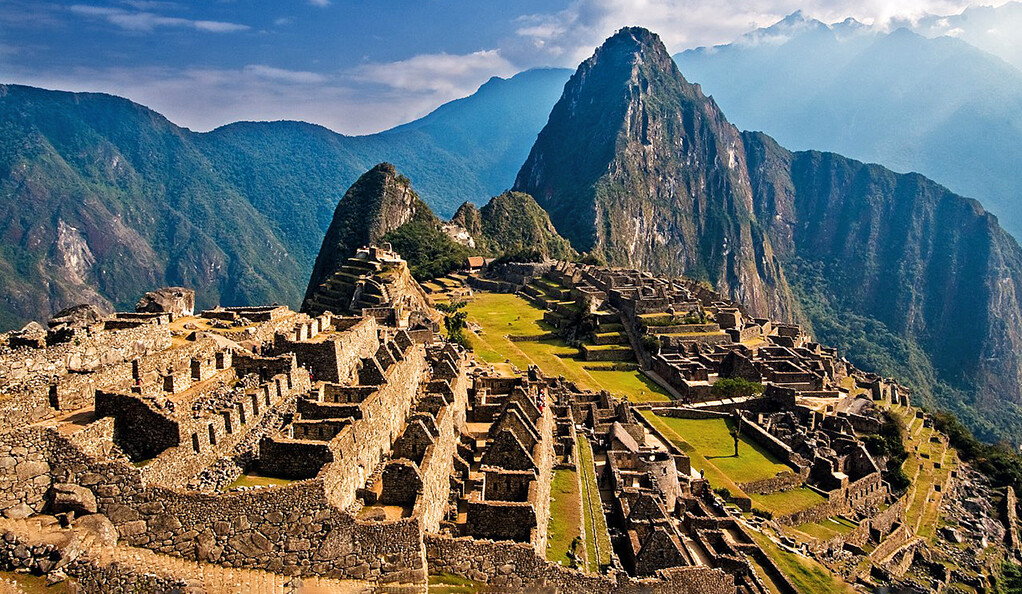
    The archaeological site, UNESCO heritage, has a limited number of daily tickets which are dealt with by the government. The tickets need to be purchased in advance if you want to guarantee your access on a specific day, and even more so if you want also to climb to Huayna Picchu, which is the peak visible in the most iconic photos. From up there you’ll have a great view on the site and you’ll have access to what remains of the buildings that the Incas thought well to build on those all but vertical walls at 2700m.
    As an alternative the other mountain (which name is Machu Picchu but to avoid confusion is called montaña) can be added to the ticket. The view is less rewarding and the climb is tougher.

    How to buy the ticket

    Tickets are sold on the website machupicchu.gob.pe. The procedure is not straightforward but quite simple to sum up:

    1. Select site, ruta (route), date and number of people to proceed with the purchase;
    2. You’ll get a file with a booking code. Such code will be needed to make the payment in the “PAGOS” section of the website. The payment needs to be processed within three hours from the booking;
    3. Once the payment is confirmed you’ll need to check-in, in the “CHECK – IN” section of the website. Only now you well get the proper entrance ticket, one page per person.

    You’ll receive in total three documents but the entrance will be only guaranteed with this ticket. Absolutely necessary to bring the ID specified in the ticket and the bank card used for the payment.

    How to get there

    If you got this far in the page I guess you’re not considering taking the helicopter or the train to get there. Otherwise you’re on the wrong blog.
    The Inka Rail trains have ridiculous prices, unless you are a Peruvian citizen. But for those who won’t make it to the Inka Trail there’s an alternative – and significantly cheaper – way to reach Machu Picchu from Cusco.

    Any agency in Cusco can book the bus per Hidroelectrica, via Santa Teresa. It will be a small creaky 12 seater recklessly driving on dusty roads for 6 hours. The last part of this road is on the edge of a precipice and, obviously, two-ways. Make sure you have enough coca leaves and anything you might need for motion sickness.
    After the bus starts a 13km walk along the railway to get to Agua Calientes, also known as Machu Picchu Pueblo. The walk takes on a pleasant path cutting across a strip of forest at the foot of the Inca mountains where you can see exotic plants such as mango, papaya and avogado, eat coffee beans straight from the plant and perhaps spot a flock of green parrots.
    The next day will start at 4am, queuing up at the gate where the ascent starts. The gate opens at 5 and from there is a good hour of steps to get to Machu Picchu: 1.3km for a 500 climb.
    We spend two nights in Agua Calientes, dedicating one day for each way of the trip and a whole day in Machu Picchu rather than having to run away at noon to catch the bus.

    Suggestions

    The worst mistake I made was the choice in clothing. Despite the high altitude the area is subtropical, hence warm and humid.
    Another big problem is represented by insect bites: mosquitoes, midges, sand flies… whatever those beasts were they left conspicuous marks on arms, face and any other corner of exposed flesh.
    Last thing about water and food provisions: the shops in Agua Calientes aren’t cheap but not exceedingly more expensive than the ones in Cusco. Just take the necessary for the bus trip and the hike and avoid taking on your shoulders, say, 6 litres of water. In Hidroelectrica there are several restaurants serving decent food for 10 soles.

    To sum up:

    • Light / technical clothing
    • Long sleeves, long trousers
    • DEET repellents to soak your clothes in
    • Antihistamines in case of bites
    • Water and food for 6 hours on a but and 3 on foot

    Sustainable tourism in Machu Picchu?

    I have no doubts, tourism in Machu Picchu is unsustainable. As a UNESCO site the daily limit should be 2500 people, but it easily gets to 5000 or more. More than the 70% of those, according to our guide, don’t even bother walking the last bit of just over 1km and take instead one of the many diesel shuttle buses incessantly going up and down. Often they reach Agua Calientes by train which, as romantic as it might sound, not only is absurdly expensive but vomits on each trip thick clouds of black smog on the lush forest it crosses.
    It’s also easier to observe that the less effort a tourist puts into reaching a place the least is their respect for it. The guides spend their time explaining facts and stories to deaf ears, mostly patiently waiting for each member of the group to take the perfect facebook photo, telling off those unlawfully feeding the lamas or putting their and others lives in danger with the ubiquitous selfie stick.

    The government turns a blind eye for the sake of money and, as it usually happens, who pays the consequences are those who cultivate a genuine interest and want to experience a meaningful visit of Machu Picchu and the remarkable guides. But also the future visitors as with this reckless policy of overcrowding and pollution the integrity of the site itself is in danger.
    If it was for me I would abolish all the buses, leaving a service only for those who are physically unable to walk, but this will just be a dream as long as short-term profit is the decisive factor.  I’m sure that these places need to be earned with time and sweat because, if its true that it’s everyone’s right to visit such an important site, it’s also true that everyone must also deserve it.

  • Monsters in the Lagoon: Cruise Ships in Venice

    Monsters in the Lagoon: Cruise Ships in Venice

    Before this summer I never heard about Gianni Berengo Gardin. If you too don’t know who he is don’t worry, I did all the googling for you: Berengo Gardin spent the past 60 years behind a camera and his black and white shots preserve intimate frames of a timeless Italy. His most famous photo is probably Venice Vaporetto (1960) and in the Seventies he documented the pitiful state inside the Italian madhouses, helping the dismissal of such anachronistic institution.
    More recently he documented with his typically crude images the horror of cruise ships in Venice and, once more, he stirred up some chaos.

    I felt like destroying something beautiful

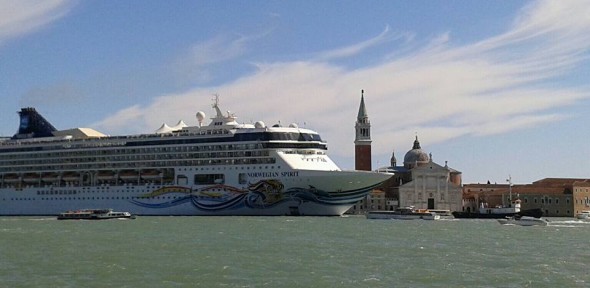
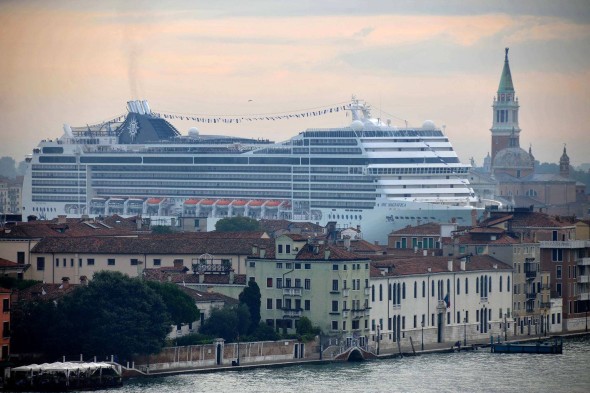
    Walking around in Venice one has the feeling of being surrounded by a piece of art: precious palaces, alleys so narrow that both walls can be touched at the same time, stone bridge crossing canals so narrow that could be easily jumped over. And then you see them, the cruise ships. Enormous steel hulks of opulence – higher than the Doge’s Palace, longer than San Marco Square – sliding through in striding contrast, like the proverbial bull in a china shop. Such ugliness and such beauty, destroying it with the excuse of loving it.
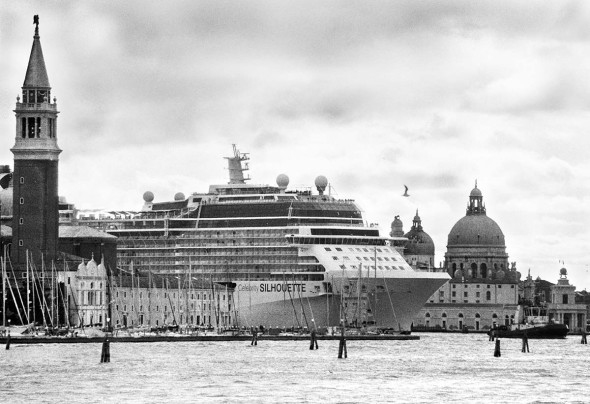
    The photos of Berengo Gardin are an exact depiction of cruise ships passing through Venice, and his exhibition has been prohibited by the mayor as “it would damage the image of the city”.

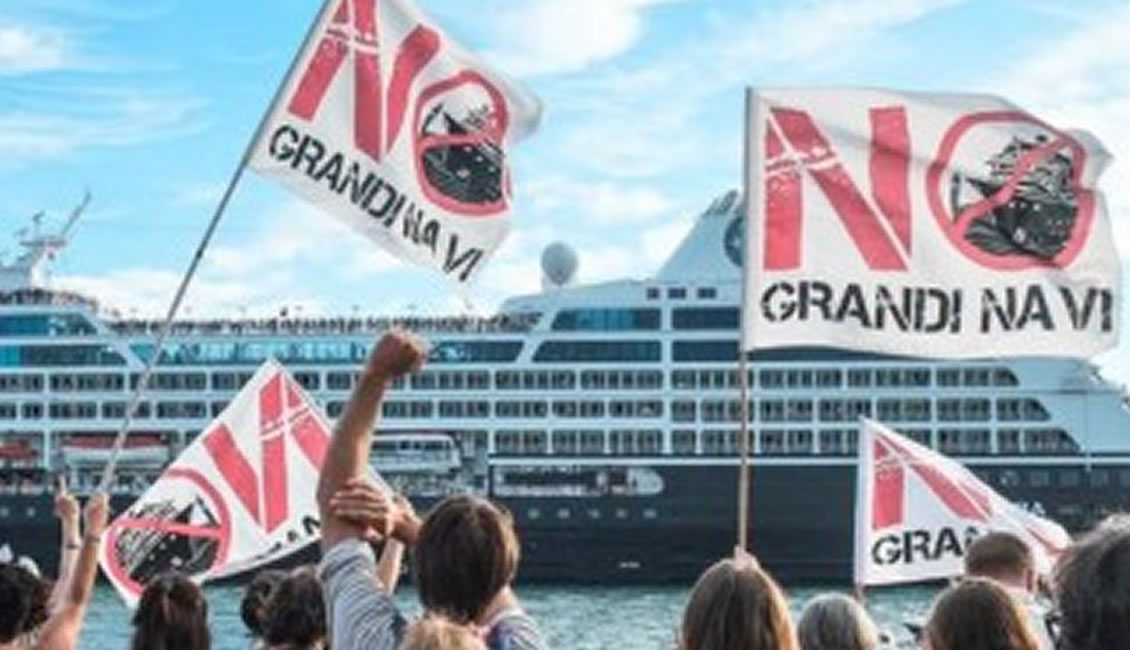
    Crociera

    The cost of money

    The current mayor of Venice, a practical and greedy entrepreneur, promotes a project that will allegedly improve the safety conditions digging new deeper canals for the ships. This was fed to the public as a sensible plan, even though ignoring the fact that new diggings will seriously compromise the fragile balance of the lagoon’s ecosystem. In this idyllic area, neither sea nor land, where unique species thrive and ancient traditions survive, we allow those ships to go through, deluded that it might be an advantage. Cathedrals of waste and tawdry tourism, disgorging thousands of people everyday for their blitz of selfies and trash.

    Cruise ships aren’t surely the only problem of Venice, and neither the only source of the flocks of bored tourists roaming the narrow streets of the city, but they are the most visible symbol of the illness that is chocking Venice. The local population, constantly under siege of hordes wearing silly hats and following red umbrellas, is forced to leave, as bread milk and meat in the shops are being replaced by expensive plastic souvenirs.
    A city orphan of its inhabitants is a city without memory and without daily activity, hence it’s as good as dead, sold by the kilo and transformed in an amusement park. Veniceland, as they called it with bitter sarcasm, appearing on thousands of photos all over the world, barely visible behind the faces of those who contributed to its death.

    Sino Grand Navi

    The Great Beauty

    To write this article I did an extensive research, digging deep into the economical, environmental and political reasons and consequences behind the cruise ships debate.
    I learned that all numbers can be opinions and all words can be twisted, but one thing that cannot be denied is Beauty. It’s obvious, simple and irrefutable. Yet we’re destroying it, to please the very same people who travel to see it and, in the process, deface it. So let’s build a proper Veniceland, since that is what everybody want, a perfect plaster reproduction somewhere else that in the photos will look exactly as the original one.

    Gianni Berengo

    Using the words of the photographer Berengo Gardin: “I was disturbed above all by the visual pollution; seeing my Venice having its proportions destroyed and being transformed into a toy, into one of those two-bit clones like you find in Las Vegas, unsettled me very deeply”.
    His exhibition is all about that and, if you happen to be in Venice by the 6th January 2016, you can still see it at Negozio Olivetti.

    “Mostri a Venezia” (Monsters in Venice) photo by Gianni Berengo Gardin

    The first two photos have been posted by the groups Vogliamo Venezia and Comitato No Grandi Navi, which I thank for their commitment.

  • 8 Ways to Prepare For a Road Trip

    8 Ways to Prepare For a Road Trip

    Going on a road trip can be a fun adventure, but it’s important to get ready to make sure everything goes smoothly. To avoid problems and make sure you have everything you need, take time to check your car and plan ahead. From checking your tires to bringing the right papers, here are eight simple ways to prepare for a safe and easy African road trip.

    Inspect Your Brakes

    Brakes are pretty important to say the least and you will be using them more on a road trip. To ensure your brake pads don’t have excessive wear that could result in a failure, it’s a good idea to have them checked. Brakes should be inspected at least once every six months.

    Check Your Tires and Bring a Spare

    We’ve all seen the bummed people on the side of the road with a blown-out or flat tire. You may have even been that person at some point. You can prevent blowouts and flats on a road trip by checking your tires before you take off, ensure you have enough tread on all four tires, consider getting your tires aligned and balanced and tire pressure in all four tires is right for your vehicle, As you head out, it’s also a good idea to have a spare tire just in case. Plus, you’ll need roadside assistance or the know-how and tools to change it yourself.

    Test Your Lights

    Your headlights, tail lights, turn signals, and brake lights will be important on a road trip. They ensure everyone around you knows what you’re going to do. You can also end up with a ticket for non-functioning lights, which is a major buzzkill on any road trip. So, perform a quick check to make sure all your lights are in working order.

    Consider an Oil Change

    Are you due for an oil change soon? If so, you might as well take care of it before your road trip. If you won’t come close to hitting the mileage milestone required for your next oil change, don’t worry about it. Either way, it’s a good idea to check all of your fluids and fluid levels before taking off.

    Get a Tune-Up

    If you’re not mechanically inclined, it’s not a bad idea to schedule a tune-up with your mechanic before a long road trip. That way, they can perform a safety inspection and make sure you don’t need any repairs so you can drive with confidence and peace of mind.

    Check the Weather and Roads

    Bad weather can turn a fun road trip into a nightmare. Depending on the situation, it could be dangerous and result in delays and detours. Being so, keep an eye on the weather and road conditions all along your route so you won’t be caught off guard. You can check both online.

    Have Your Right Full Travel and Vehicle Documents

    While it’s always important to have the required papers in the car with you, it’s even more important on a long road trip far from home. Ensure you have your license, registration, proof of insurance, and the contact information for your roadside assistance provider, if you have one.

    Get Enough Rest, Food and Water

    Long drives can be exhausting. You may start out feeling great, but after five or so hours, you’ll likely begin to feel strained. So plan out your trip carefully starting with the night before. Ensure you get seven to eight hours of sleep. Plan breaks to eat, drink, and rest. Consider taking turns with other drivers when possible. And don’t push yourself beyond what’s comfortable, as drowsy driving can be hazardous.

    Conclusion 

    With a little preparation, your road trip can be the enjoyable self drive experience you’ve been anticipating. By following these eight steps—whether it’s ensuring your car is in top shape, planning for the unexpected, or prioritizing your well-being—you’ll set yourself up for a smooth and memorable journey. So take the time to check off these essentials before you hit the road, and you’ll be ready for whatever comes your way. Safe travels!