Month: January 2025

  • Getting Around London: Tube, Bus and Oyster Card

    Getting Around London: Tube, Bus and Oyster Card

    Each time people ask me “how does the public transport in London work?” a shiver runs down my spine. It’s actually more complicated to explain than it is to understand. I reckon it’s a very clever system, a bit expensive, but efficient.

    During your stay you’ll either use the tube or the bus and, according to the length of your stay you might go for single tickets or passes, either in paper form or on a Oyster Card. Let’s see in details how it works and what suits you better.

    What’s best for a few days in London? Found your best Oyster deal on our special post.

    Tube, Bus, Overground

    With the exception of the Thames clipper and the Greenwich cable car, these are the means of transport that will carry you around London:

    The Tube

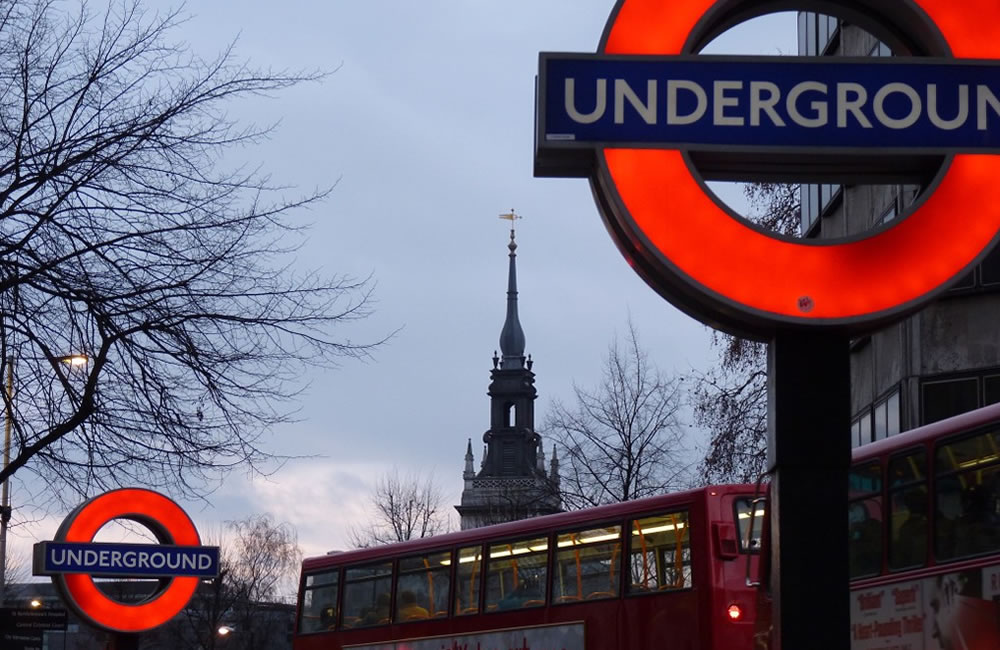
    The oldest underground system and probably the most famous with its iconic “mind the gap”, the Tube has recently turned 150 years old and survived the millions of Olympic visitors. You can take the Tube to the most famous places, including Heathrow airport.

    It’s the quickest way to get across the city, but also the most expensive. If you’re in London for a visit you’ll probably be limited to the zones 1-2 in case you were wondering what that means when you try to buy a ticket or a pass.

    The Bus

    The world famous double decker buses are one of the most representative symbols of London, and they can be found in key-rings and on fridges all over the world.

    They recently retired the good ol’ routemaster and replaced it with a brand new one, with a futuristic design, that can be found on the routes 38, 9, 11 and 24.

    A ticket or a bus pass will cover all the 6 zones, with no time limit, but if you have to change don’t forget that you will be charged (in case you have a pay-as-you-go oyster) a fare on each bus.

    In the unlikely event the weather is rough, you just missed your bus, and you want to know if you have time for one more drink before the next bus, check this very accurate website: countdown.tfl.gov.uk

    Follow this link for a full bus map.

    Night bus

    Technically there’s nothing different from the above buses but these are real life-savers. Some lines run on 24 hours, some they just slightly change the route and add a ‘N’ before the number. Wherever you’re going to spend your night the night buses will take you home (unless you fall asleep and wake up in a deposit or in the middle  of nowhere).

    Overground

    A urban train network, the Overground is often underestimated. However it’s very useful to cross the city west-east. It’s been recently extended to cover many areas where the Tube doesn’t go, especially where the “east line” were supposed to be, crossing the east end and connecting popular areas such as Hoxton and Shoreditch. The Overground trains are not included in the TFL passes and you will be charged on your pay-as-you-go money.

    Tickets and Passes

    Single ticket

    The memories of my first visit in London will always start with me arriving in Stratford (way before the Olympics, it was still pretty rough), getting the tube to St. Paul’s and being charged £4. Five stops, nearly £1 per stop. Lesson learned: never buy a single ticket unless you can’t really avoid that. To know how much is a tube ride from A to B click here. It might happen to buy a single ticket for a bus, you can usually do that on board or at the automatic machines that can be found at some stops. The bus ticket is £2.50 and can only be paid via contactless, no cash accepted.

    Daily pass

    If you seek peace of mind and you want to take any necessary mean of transport without worrying about the maths, the daily pass is your choice (unless you stay for more than 4-5 days):

    • Daily travelcard tube + bus: £12.00 (zone 1-4)
    • Bus daily pass: £5.00 (travel the day of purchase up to 4.29am the following day)

    Oyster Card

    If you’re staying for longer than a weekend and you want to make your life even easier, or you want one more souvenir to take back home, then go for an Oyster Card. It can be obtained at any tube station and requires a £5 deposit that you will get back once you won’t need it any more. You’ll need to top it up, and you have pretty much two options:

    Pay as you go

    If you have a laid back approach and no schedule, if you don’t know whether you’re going to barely take a bus a day or if you’re going to spend more time on a tube than actually at ground level, this is your option.

    Top your Oyster up and touch it on the reader each time you get in the tube or on a bus. Each access will deduct a single fare, that’s way cheaper than buying tickets:

    • Single access to Tube with Oyster: £2.30 (£2.90 peak: 6.30-9.30 / 16.00-19.00 Mon-Fri)
    • Single trip on bus with Oyster: £1.50

    What if you take the Tube 100 times in one day? You won’t be charged £230, as there is a limit, that equals the cost of a daily pass:

    • Price cap tube + bus: £6.40 (£2 cheaper than in 2014!)
    • Price cap bus: £4,40

    To know the exact amount of each fare you can use this this service.

    Weekly and Monthly pass

    On your Oyster you can also put a weekly or monthly pass, available for tube+bus or just bus. At this stage you can be considered an advanced user, so you can read the price tables easily:

    Many people don’t know that pass and pay-as-you-go can be on the same Oyster at the same time, which is the beauty of this system. For instance you can have a bus pass some credit, so that when you take your occasional tube or overground train, which are not covered from that pass, money will be deducted from your allowance. If you really want to know more enjoy the TFL website: www.tfl.gov.uk

  • 3 Great Places in Milan to hang out

    3 Great Places in Milan to hang out

    There are a few really cool places that we love to regularly visit in Milan. They’re quite eclectic and we found it difficult to categorize them. Yes, we go there for food but we couldn’t fit them in our article on the restaurants in Milan as they’re way more than just a restaurant. Let’s find them out!

    Santeria

    Address: Via Ettore Paladini, 8 Milano (Bus 54, Tram 5)
    Phone no.: 02 36685216 / 02 36685215 (shop) 
    Milan should be full of places like this. A nice spot, based on a simple solid idea, that would fit perfectly in ShoreditchPrenzlauerberg or Williamsburg, and that (sadly) in Milan is the first and only of its kind.
    Breakfast, brunch, lunch, aperitivi, vintage clothes records and book shop, gigs, indie movies and co-working space. If they also had mattresses to lay down between the tables there wouldn’t be a reason to leave Santeria.
    Visitat their website: www.santeriamilano.it

    Ostello Bello

    Address: Via Medici, 4  20123 Milano (MM1-3 Duomo, Tram 2-3, how to get there)
    Phone no.: 02 3658 2720
    Not only it’s one of the very few authentic hostels in Milan, but Ostello Bello offers some of its services and activities to a wider audience. Anyone can visit it without necessarily having to spend a night. They have food all day round and leisure activities from music to games, sometimes they’re improvised so any day is good to pop there. If you’re after a meaty lunch make sure to go there for the monthly “Turbo Burger” day. Only one item on the menu, guess what it is?

    Visit their website: www.ostellobello.com and follow them on facebook to keep up to date.

    La Balera dell’Ortica

    Address: Via Giovanni Antonio Amadeo 78, Milano (Bus 54, 39)
    Phone no.: 02 70128680
    It takes just 20 minutes by bus from Duomo, or a short bike ride, to end up in a place where time seems to have stopped 50 years ago. The “Balera” could be a perfect set of an old school Italian movie, like Fellini showing the more trivial aspect of the Italian working class having a good time with the few spare money they had. As you enter you will find the balera itself to your right: a open-air dance floor where couple dance the night away whirling on the rhythm of the traditional popular music called liscio, which means smooth.

    To the left you’ll find the bar restaurant. A very rough diner, not the same quality of the bocciofila Caccialanza but cheaper. Ideal during the warmer months, when you can enjoy the patio outside and chill with few drinks. Few minutes in and you’ll forget to be in a big city and you’ll start feeling the relaxed atmosphere of a vintage countryside.

    Open every day of the week from 13.00 to 00.30 (1.30 Friday, Saturday and Sunday).
    Visit their website: www.labaleradellortica.com

  • Iceland: What’s the Best Travel Guide?

    Iceland: What’s the Best Travel Guide?

    Choosing a travel guide is never an easy task. The best would be to buy all of them or, at least, go to a library and go through the most of them, before deciding. For our trip to Iceland went for the Rough Guide, just for a change, as it served us well in Warsaw. Since we were driving a car we also needed to buy a detailed map.

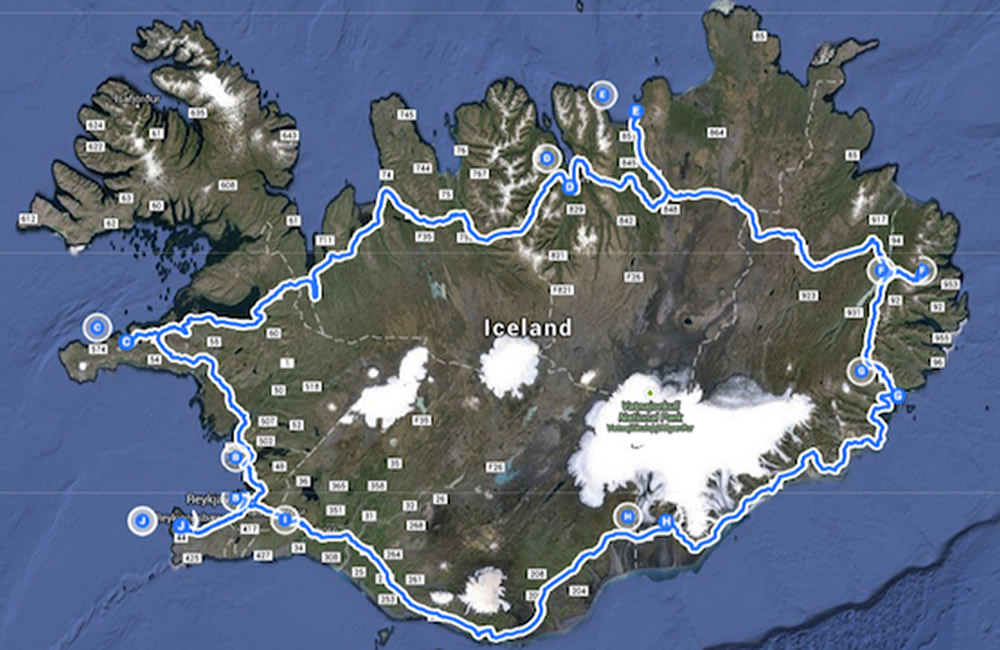
    Our Iceland Road Map

    We were expecting to consult our map outdoor, under extreme weather conditions, the paper torn apart by strong gales and battered by icy rain. This never happened but we decided to buy a waterproof and tearproof map, one of the folding type. We would have preferred a book map, much easier to use inside the car, but the difference of price between the two models was high enough to influence the choice. I would now go for the book map, or for more detailed regional maps as details can be significative when you’re lost in the middle of nowhere with nobody to ask directions to. Check our article for more tips about maps and driving in Iceland.

    Rough Guide Iceland 2013

    Iceland Travel Guides

    Our Rough Guide let us down in few occasions. The Snaefellsnes peninsula was described as a collection of eventless towns, wooden churches and rocks, while our host in Grundarfjordur penned down for us an unforgettable one-day itinerary.

    In the Myvatn region we were massively disappointed as we missed out on this just because it wasn’t clearly described and it wasn’t on the map. Talking about guides with a couple, whose path we crossed a few times along the road, they had the same feedback about their Lonely Planet. Sure we might have got all the hints if we had read the guide thoroughly but I reckon guides should be thought for being consulted quickly on the go.

    They can be found at any tourist information centre of the country, I started collecting them even if we initially thought they were just an excuse to advertise local hotels and restaurants. As a matter of fact they turned out to be incredibly useful, rich of details on the area they cover, from the most popular destinations, to the best activities, to some precious info that wasn’t on our Rough guide. They’re for free and can also come with an extra folding maps which, even though is not quite as detailed, have been very helpful to us in several occasions.

    Self-drive tours

    Before planning the trip ourselves, we’ve contacted some companies organising self drive tours. They are pretty cool as they organise everything for you but they are not intrusive (which we hate) so, once you’re there, you’re on your own and you are completely free, either to stick to the plan or to go off route. Their offer includes: car rental, accommodation booking, maps, suggestions, GPS, assistance. Considering the costs in Iceland, what those guys charge is perfectly acceptable for a nicely planned trip and a safety net. However it was above our budget so we decided to do it on our own.
    The companies we contacted, that seemed professional and reliable, are the Reykjavik based Extreme Iceland and Discover the World.

    Car rental

    First thing we had to get the car sorted. After reading countless forums and blogs we picked Blue Car Rental as our company of choice. It appears to be one of the cheapest and one of the most reliable with smashing reviews. They also offer some older model for a cheaper price (like the guys at SADcars do) so we opted for a Jimmy. If you are not going to use the “difficult” roads, called F-roads, you really don’t need a 4×4 but, since this model costs only little more than small car we opted for a 4×4. And also we figured it’d be cool to drive a car called Jimmy. Different combinations of days – for pick up and drop off – and location – either Keflavik or Reykjavik – can change the final bill massively. Moreover those companies usually offer a transfer service so they will come pick you up wherever you are and they’ll take you where you need to go after you’ve given the car back.

    Booking Accommodation

    This has proven harder than we thought. With few properties, and far between, there’s no much choice in Iceland for a bed to sleep, especially if you’d rather choose for a lower budget. To make things worse the tour operators book, at the beginning of the season, as many rooms as they think they’ll need, leaving even fewer options for the independent traveller, especially in busy areas such as near the Skaftafell National Park. For this reason we recommend to book every night, largely in advance, unless you have a camping kit as a back up plan.
    We’ve booked a mix of rooms in hotels and guesthouses on Booking.com, and AirBnB. We’ll stay in a wooden cabin and in a vintage van parked in a back yard of a house overlooking a fjord… not sure whether to look forward to that or be scared.

    Given the nature of this country and the scarcity of accommodation I highly recommend to contact every property booked, asking for confirmation of availability and if the location is correct. A room booked on AirBnB turned out to be in Reykjavik, not near Akureyri as shown on their map. Luckily we found out before leaving and not once there, in the middle of nowhere.